


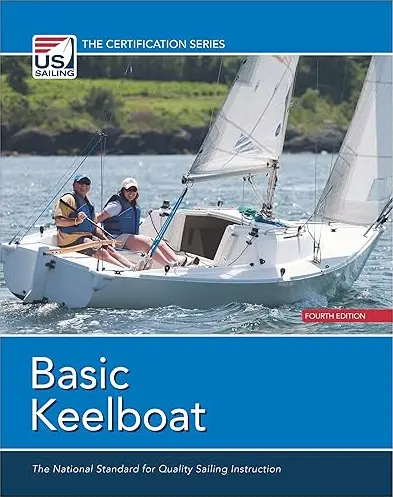
Prerequisites
There is no prerequisite for the Basic Keelboat Certification.
Certification Requirements
A Basic Keelboat graduate will have demonstrated the ability to safely and effectively skipper and crew a basic day sailing keelboat in familiar waters, under light to moderate wind and sea conditions. Some regions may have stronger prevailing conditions, which are acceptable if the candidate can safely control the boat and be aware of his or her limitations in these conditions.
The certification requires the successful completion of the following knowledge and practical skill requirements.
 3 DAY COURSE
DAY 1: SATURDAY YOU ARE BOOKING
DAY 2: FOLLOWING SUNDAY
DAY 3: SATURDAY ONE WEEK FROM START DATE
Basic Keelboat Series:
WWSC Members $595
Includes textbook, US Sailing log book, certification, and 1-year membership to US Sailing.
Non Members $695
Textbook not included - must purchase separately from our office, US Sailing log book, certification, and 1-year membership to US Sailing.
Preparation to Sail:
- Demonstrate the ability to recognize and forecast prevailing local weather conditions.
- Demonstrate how to properly board a boat.
- Perform a presail check for the boat’s flotation integrity, safety and legally required equipment, and crew indoctrination.
- Demonstrate the proper rigging of the sails, halyards, sheets, blocks, and winches.
- Check all other equipment specific to your boat not indicated above.
Crew Operations and Skills:
- Demonstrate how to put on a life jacket.
- Demonstrate tying and use of knots: stopper knot, bowline, cleat hitch and a square knot.
- Demonstrate the use of these sail controls: halyards, sheets, Cunningham/downhaul, and outhaul.
Leaving the Dock or Mooring:
- Demonstrate appropriate helmsman and crew coordination and skills for departure suitable to the conditions: raising sails, line handling, casting off and boathandling.
Boat Control in Confined Waters:
- Demonstrate in close quarters under sail: starting, stopping, speed control, tacking, jibing, steering control, sail luffing, the No-Go Zone, getting out of irons, backing the jib, and crew coordination and communication.
- Demonstrate sailing a predetermined closed course and maneuvering around obstacles.
Navigation:
- Point out Aids to Navigation in the harbor and local waters that you are sailing, and respond accordingly.
Navigation Rules, International-Inland:
- Demonstrate the use of Navigation Rules while sailing.
Boat Control in Open Water:
- Demonstrate proper sail trim with accurate sheet adjustment of the main and headsails. Make use of the sail telltales and identify points of sail.
- Perform a heaving-to maneuver.
- When appropriate, demonstrate sailing “by the lee” and explain the inherent dangers involved.
Heavy Weather Sailing:
- Demonstrate how to reef and/or depower sails.
Overboard Rescue Methods:
- Properly demonstrate one of the overboard rescue methods, which is most appropriate for your sailing ability, boat type, crew experience, wind and sea conditions, and maintaining constant visual contact with the person in water.
Safety and Emergency Procedures:
- Explain the proper procedure for using an approved distress signal.
Returning to the Dock or Mooring:
- Demonstrate appropriate helmsman and crew coordination and skills for arrival under sail and/or power suitable to the conditions: boathandling, deploying fenders, stopping, tying up and lowering sails. Explain at least two different approach plans for other conditions.
- Demonstrate stowing of sails, rigging, and equipment. Thoroughly clean the boat, and install any covers.
- Check both the electrical and bilge systems for dock operation if required.
- Check the locks on companionway, lockers, and hatches. Make a final check of docklines, spring lines, and fender placement.